
Tyre care
When to replace your tyres: tread depth, age and warning signs
Worn, old or damaged tyres all need replacing — but how do you tell? How to read your tread, find your tyre's age and spot the signs it's time for new ones.
Nova Tyres workshop team 4 min read

In this article
Tyres don't come with an expiry light on the dashboard. They wear slowly, age quietly and can be damaged without you noticing — so knowing when to replace tyres comes down to three checks: tread, age and damage. Get them right and you'll replace them at the right time: not too early, and never too late.
1. Check the tread depth
Tread moves water away from the contact patch so the tyre can keep gripping in the wet. As it wears down, that ability drops away — long before the tyre looks bald.
In Australia the legal minimum tread depth is 1.5 mm across the tyre's main grooves. Every road tyre has small raised bars moulded into those grooves, called tread wear indicators. When the tread is worn level with the bars, the tyre has reached the limit and must be replaced.
You can check with a tread depth gauge, or simply look for the indicator bars. Check across the whole width: wear that's heavier on one edge usually points to a wheel alignment or pressure problem.
What you see | What it usually means |
|---|---|
Both outer edges worn | Driving under-inflated |
Centre of the tread worn | Driving over-inflated |
One edge worn more than the other | Wheel alignment is out |
Patchy, scalloped wear | Worn suspension or an out-of-balance wheel |
2. Find out how old your tyres are
Rubber hardens with age, even on a tyre with plenty of tread left — which matters for cars that don't do many kilometres, caravans and spare tyres. On the sidewall, look for a four-digit code at the end of the DOT number: the first two digits are the week and the last two the year it was made. 2319, for example, means the 23rd week of 2019.
Many tyre makers recommend having tyres inspected every year once they're five years old, and replacing them after ten years at the most, whatever the tread looks like. Your tyre maker's advice always comes first.
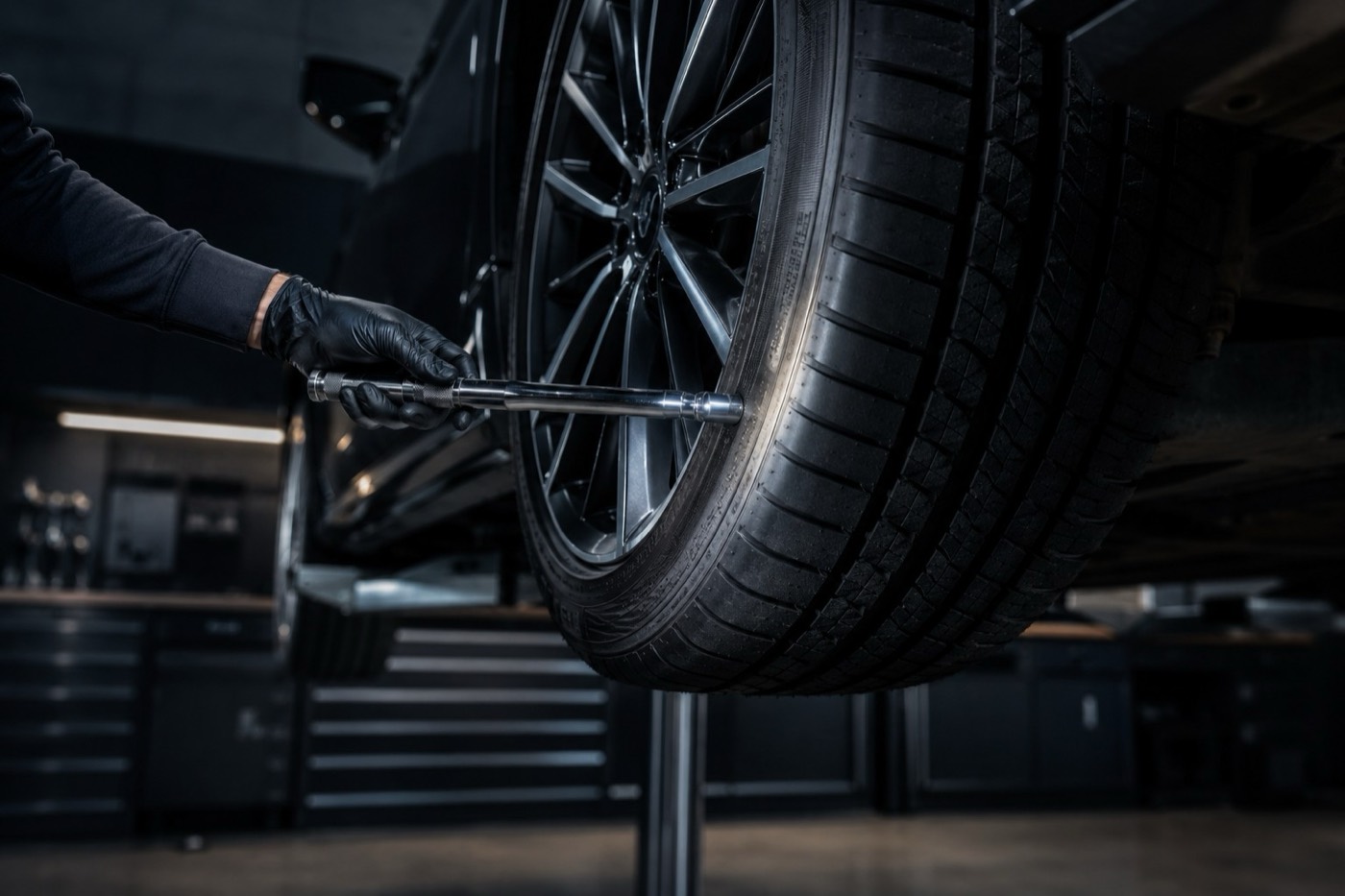
Cracks in the sidewall are a sign the rubber has aged.
3. Look for damage
Bulges or bubbles in the sidewall — the internal structure is damaged. Replace the tyre straight away.
Cracks in the sidewall or between the tread blocks — the rubber is ageing.
Cuts, or cords showing — the tyre is no longer safe.
Punctures near the shoulder or sidewall — these usually can't be repaired safely.
4. Notice how the car feels
Vibration through the steering wheel, the car pulling to one side, more road noise than usual or a tyre that keeps losing air are all worth a look. Some are tyre problems, some are alignment or balancing — either way, a quick inspection tells you which.
If you're unsure, have them looked at. A tyre check is free — a skid on worn tyres isn't.
Common questions
What is the legal minimum tread depth in Australia?
1.5 mm across the main tread grooves. The tread wear indicators moulded into the grooves sit at this height.
Can I replace just one or two tyres?
Often, yes — ideally in pairs on the same axle, with the newer tyres fitted where the vehicle maker recommends. We'll check the others and tell you honestly if they're fine.
Can an old tyre with plenty of tread still be unsafe?
Yes. Rubber hardens and cracks with age, which reduces grip. That's why the tyre's age matters as well as its tread.
Think it might be time? Search by your tyre size or vehicle to see what's in stock, with fitting at your nearest Nova store.
Written by
Nova Tyres workshop team
Tyre fitters and mechanics from Nova's stores across Melbourne and Sydney.